by Grace
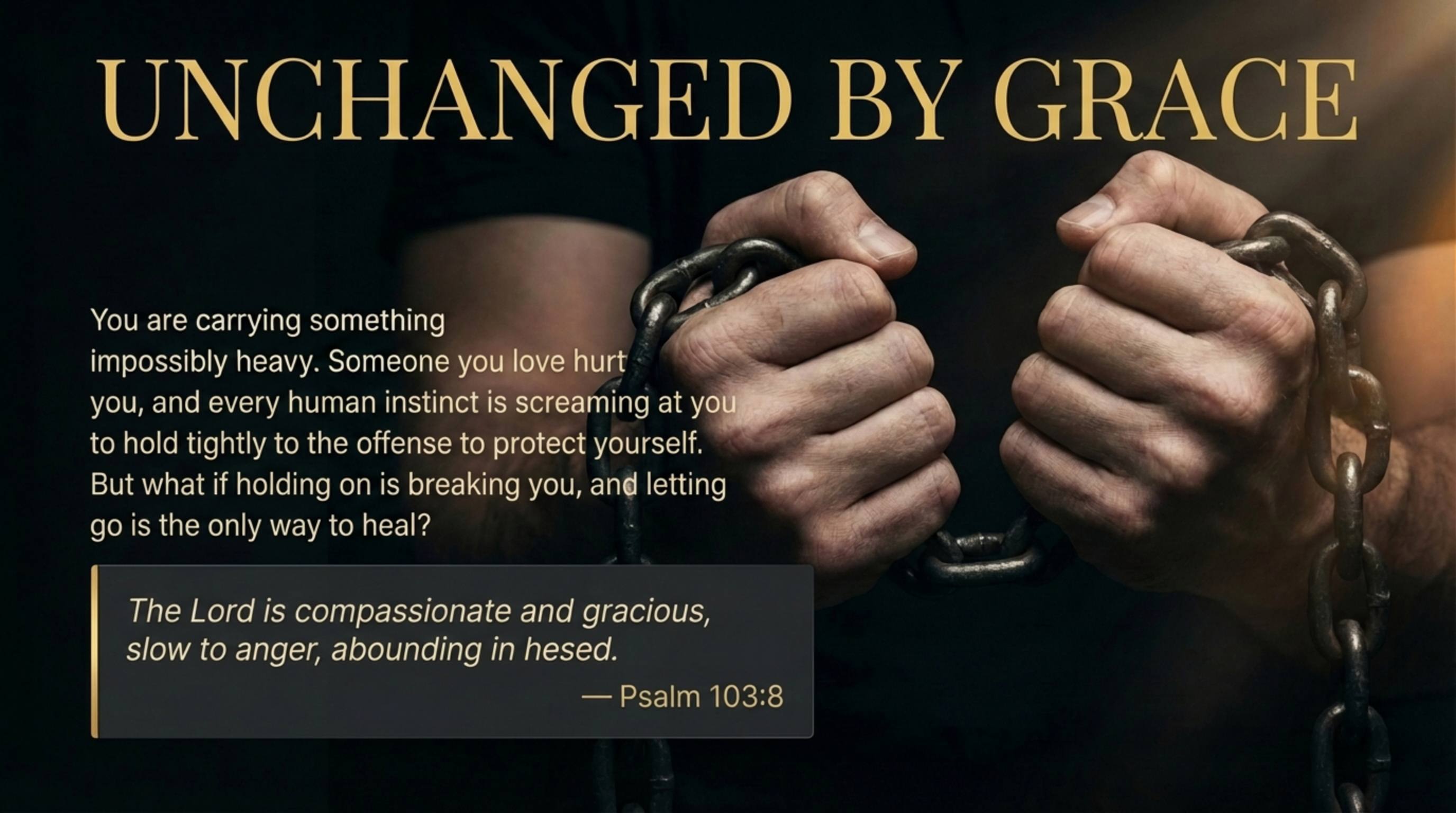
and letting go is the only way to heal?"
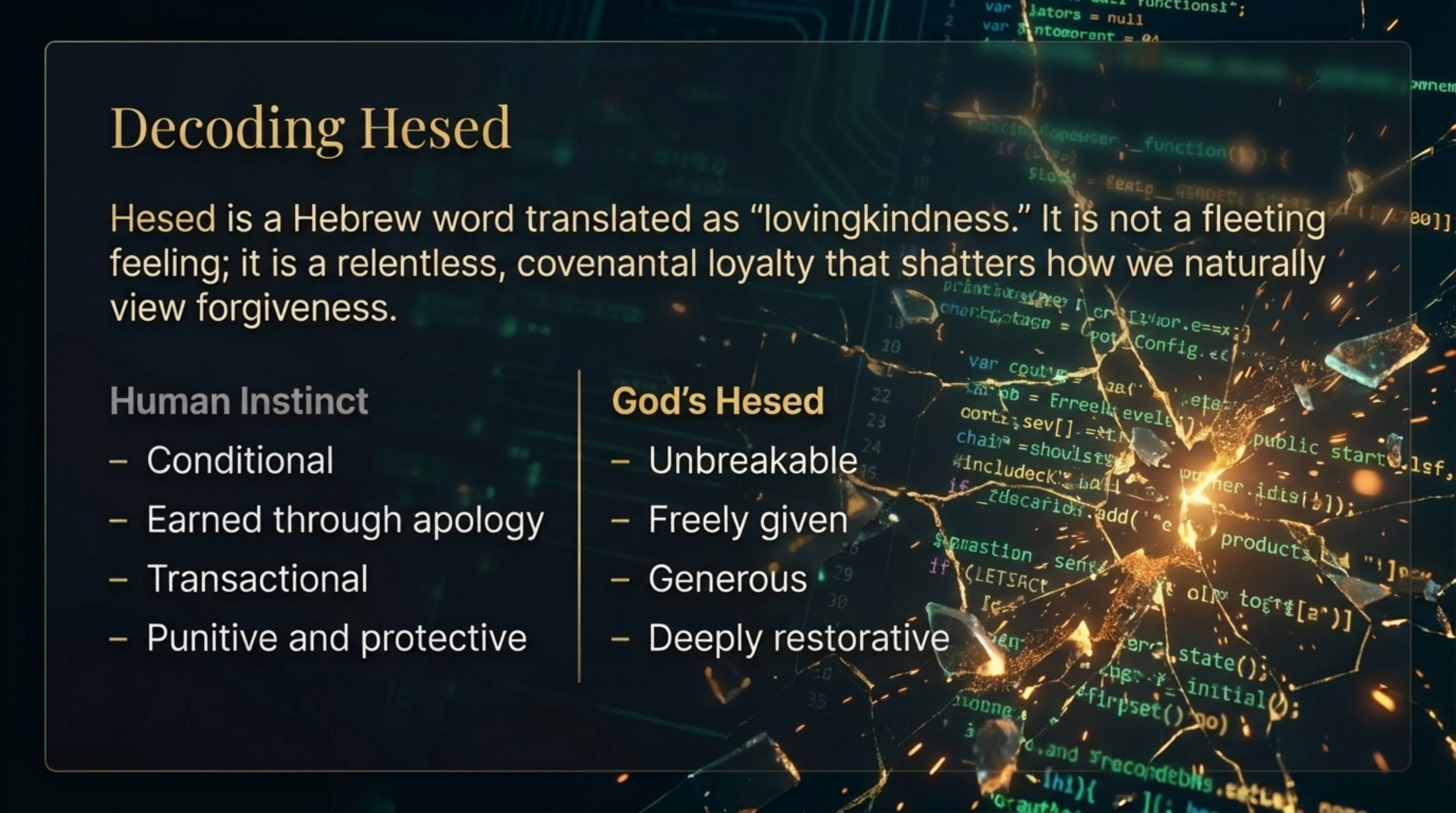
| Human Instinct | God's Hesed |
|---|---|
| Conditional | Unbreakable |
| Earned through apology | Freely given |
| Transactional | Generous |
| Punitive and protective | Deeply restorative |
God does not forgive the way we forgive. He does not wait for an apology, weigh the offense, or calculate what is fair. He releases because that is His nature — and then calls us to reflect that same nature to others.

God set a radical standard for His people early on. To belong to Him meant categorically refusing to harbor grudges. It was the first call to open our hands and release offenses — not because people deserve it, but because God's people are defined by the generosity He has shown them.
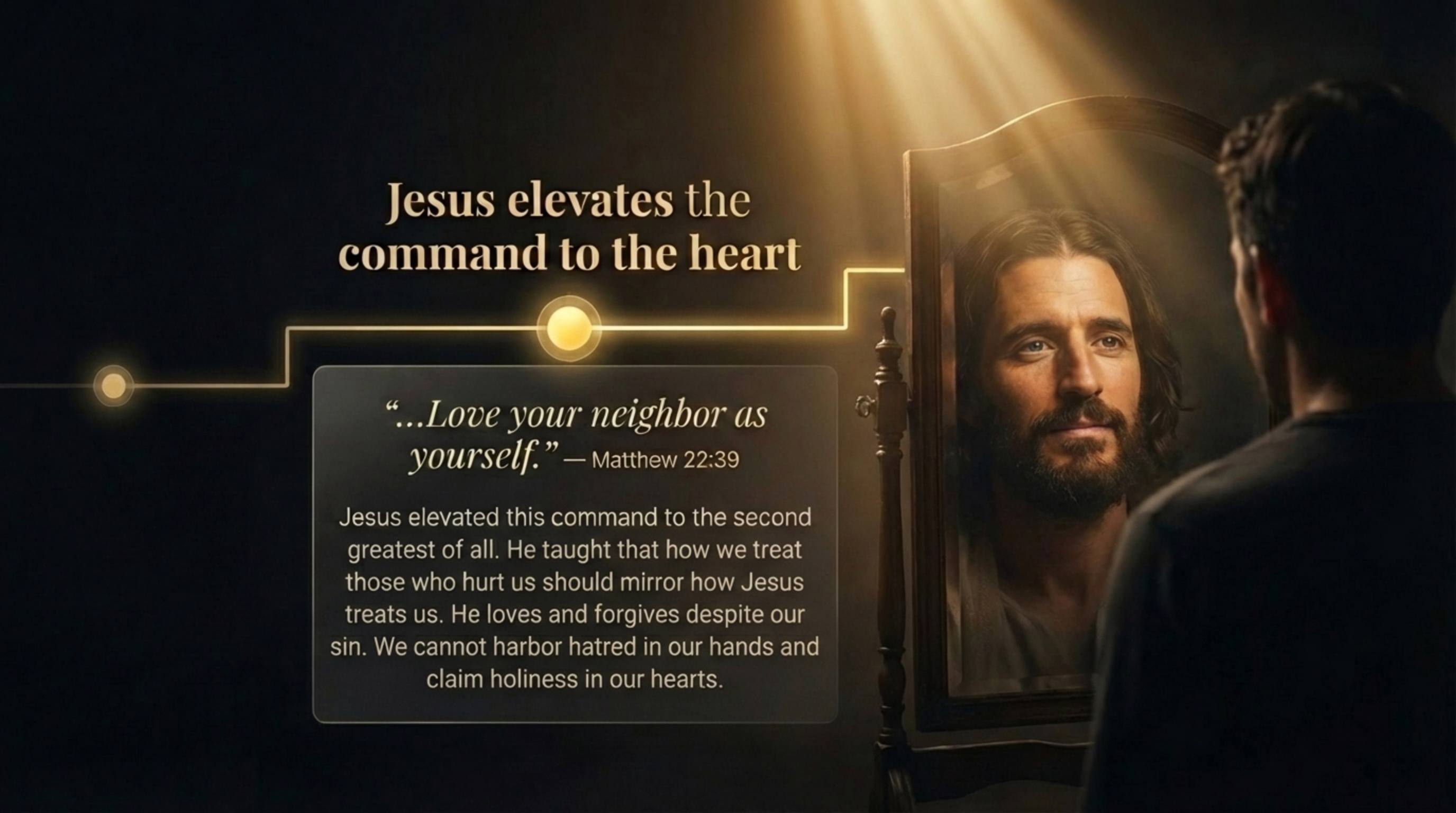
Jesus elevated this command to the second greatest of all. He taught that how we treat those who hurt us should mirror how Jesus treats us. He loves and forgives despite our sin.
We cannot harbor hatred in our hands and claim holiness in our hearts. The two are incompatible — and Jesus makes that impossibly clear.

Paul brings it all together. We do not forgive by our own willpower. We forgive because we have been entirely forgiven. The cross is the ultimate act of hesed — an endless well we draw from when someone hurts us.
The model is not "forgive and maybe God will forgive you." The model is: you have already been forgiven an unpayable debt — now pass it on.
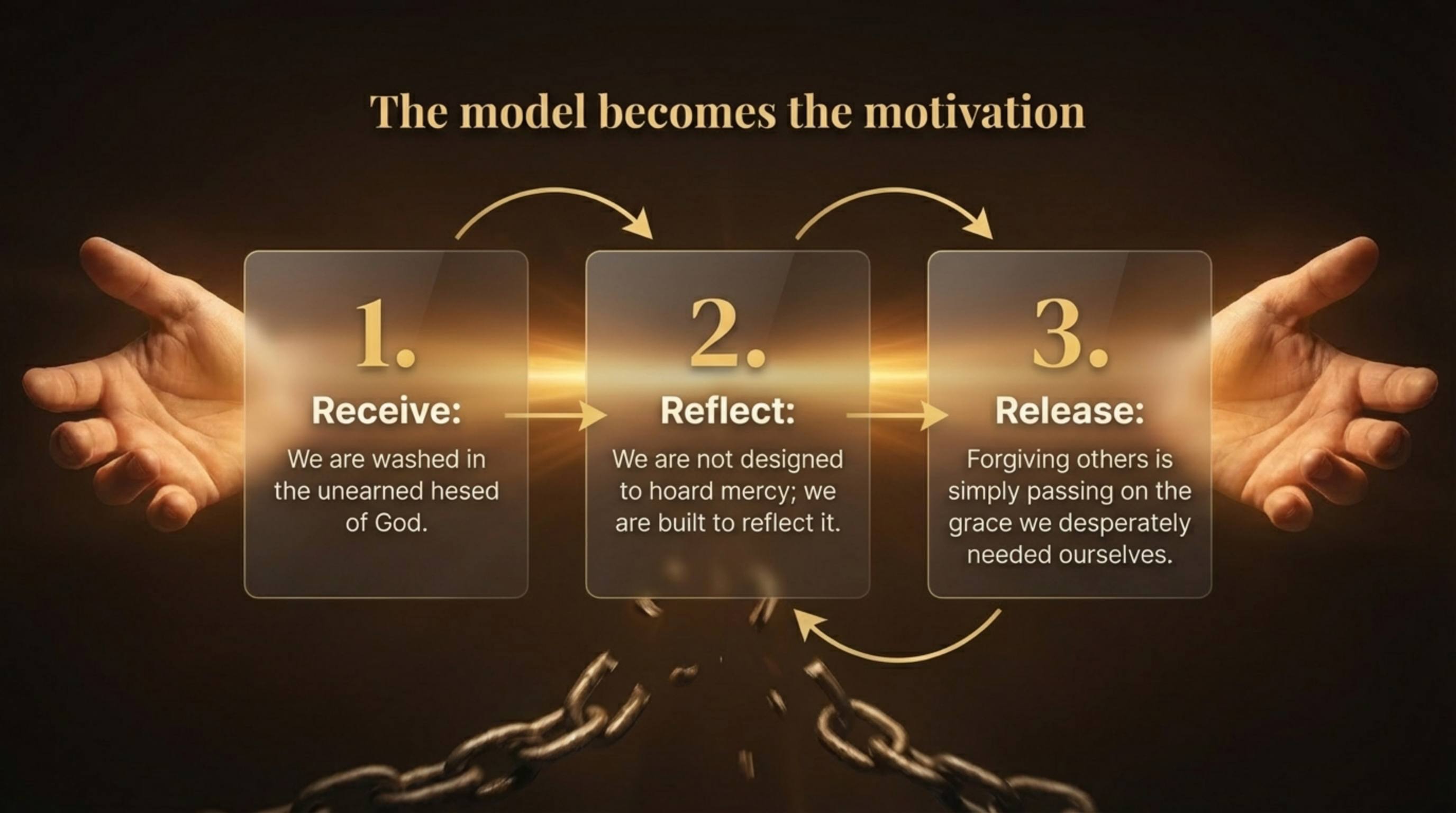
This is not three disconnected commands. This is a single, unbroken thread woven through 1,500 years of Scripture:
God commanded it → Jesus embodied it → Paul explained it.
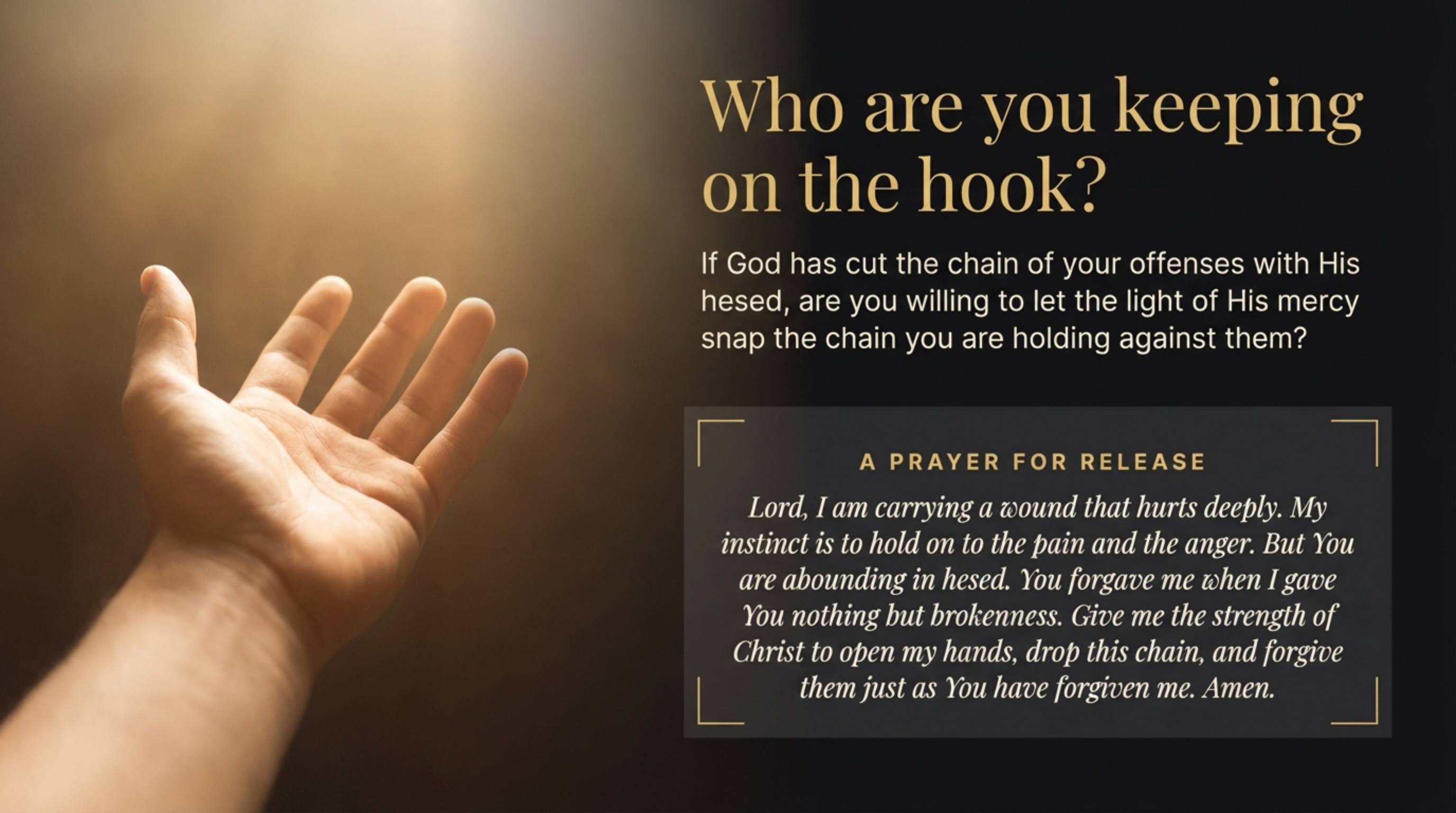
If God has cut the chain of your offenses with His hesed, are you willing to let the light of His mercy snap the chain you are holding against them?
You are carrying something impossibly heavy. Someone you love hurt you, and every human instinct is screaming at you to hold tightly to the offense to protect yourself.
But what if holding on is breaking you, and letting go is the only way to heal?
entirely forgiven.
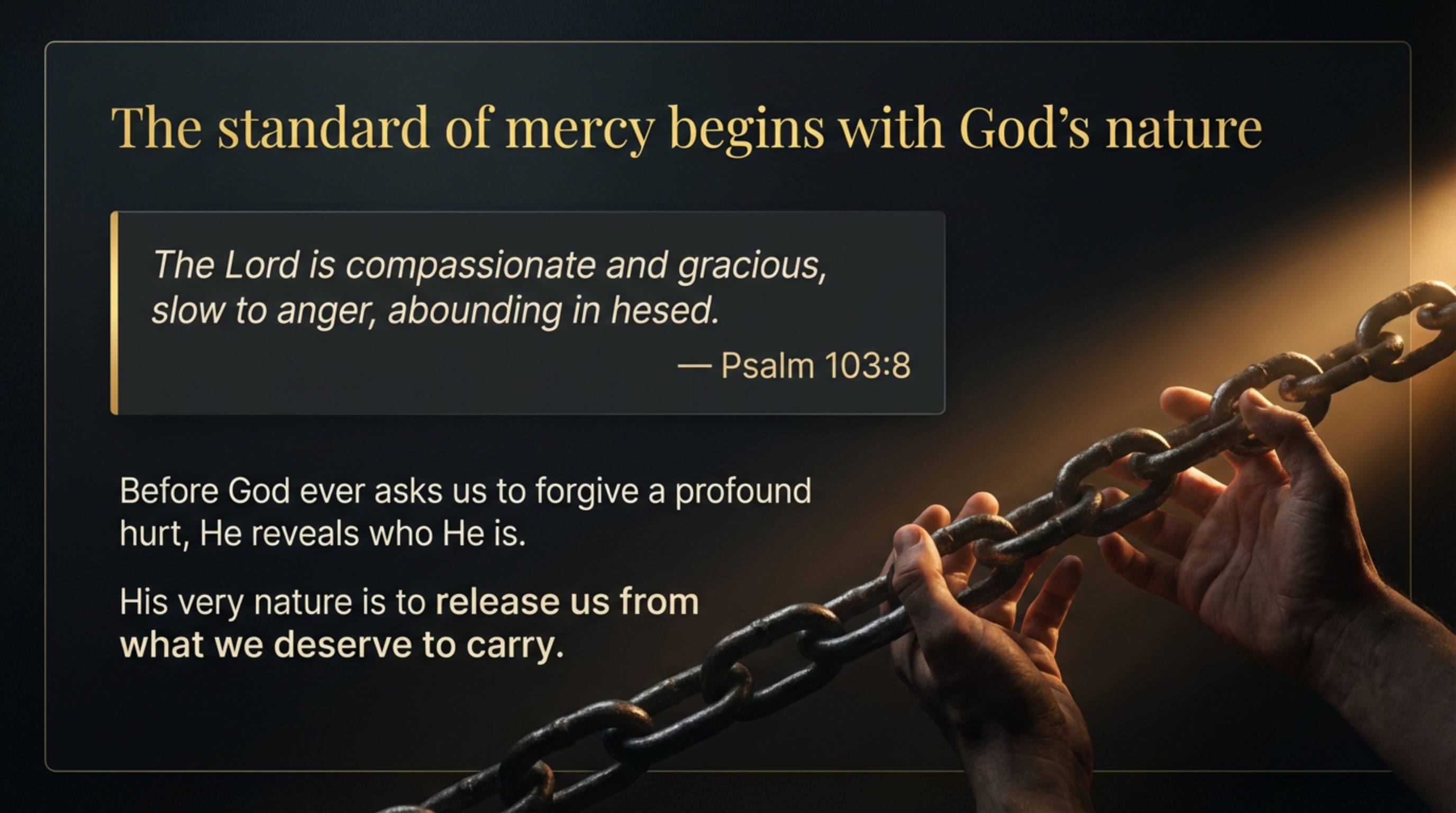
Before God ever asks us to forgive a profound hurt, He reveals who He is. His very nature is to release us from what we deserve to carry. Every command to forgive flows not from obligation — but from the overflow of what He has already given us.