the Dead

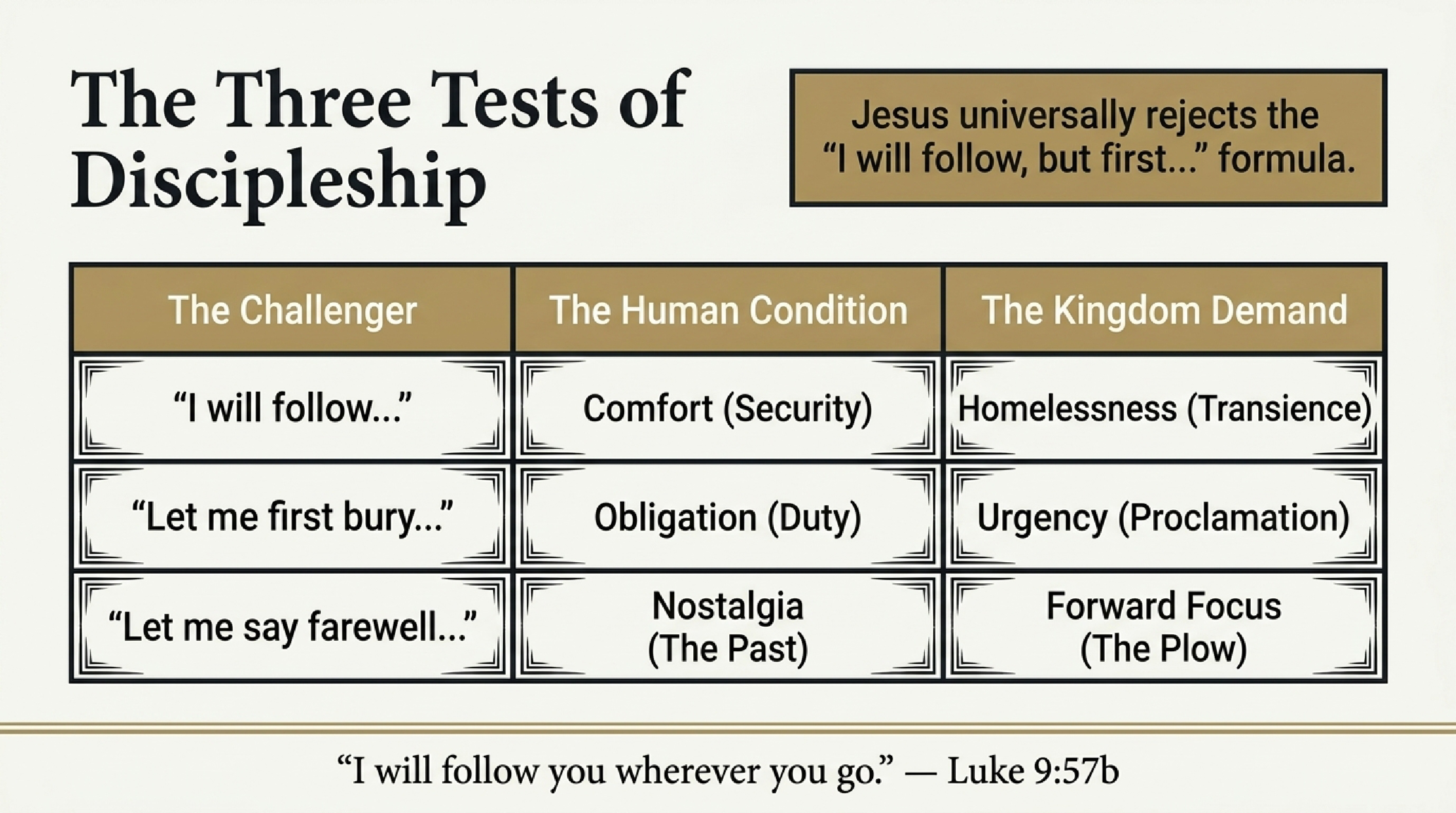
Three men. Three excuses. Three stripping responses. Notice the pattern — each man's hesitation is not rooted in evil, but in good things: security, family duty, proper farewell. Jesus doesn't dismiss the goodness of those things. He outranks them.
| The Condition | What It Reveals |
|---|---|
| "I will follow…" (comfort) | Security over surrender |
| "Let me bury my father…" (duty) | Obligation over obedience |
| "Let me say farewell…" (past) | Nostalgia over the now |

The man volunteers boldly — "wherever you go." Jesus takes him at his word and shows him where that is. No fixed address. No guaranteed security. No home base. The first requirement of discipleship is releasing the demand for earthly comfort as the price of your obedience.
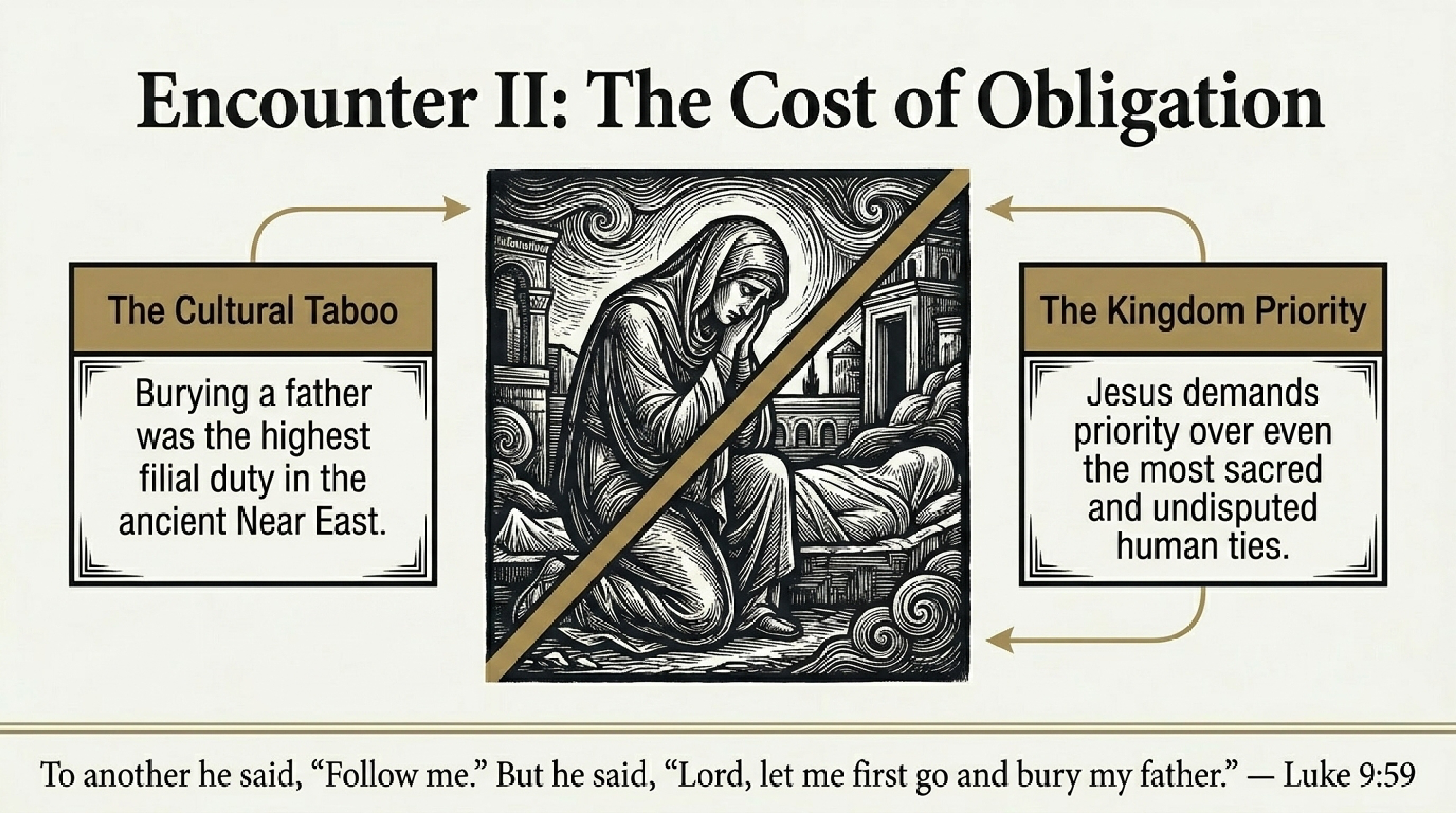
Burying your father was not optional in the ancient Near East. It was honor, law, and love woven together — a duty no Rabbi would normally override. The crowd would have heard Jesus' response as shocking. He is not being cruel. He is making a claim that supersedes the highest obligation Jewish culture had categories for.
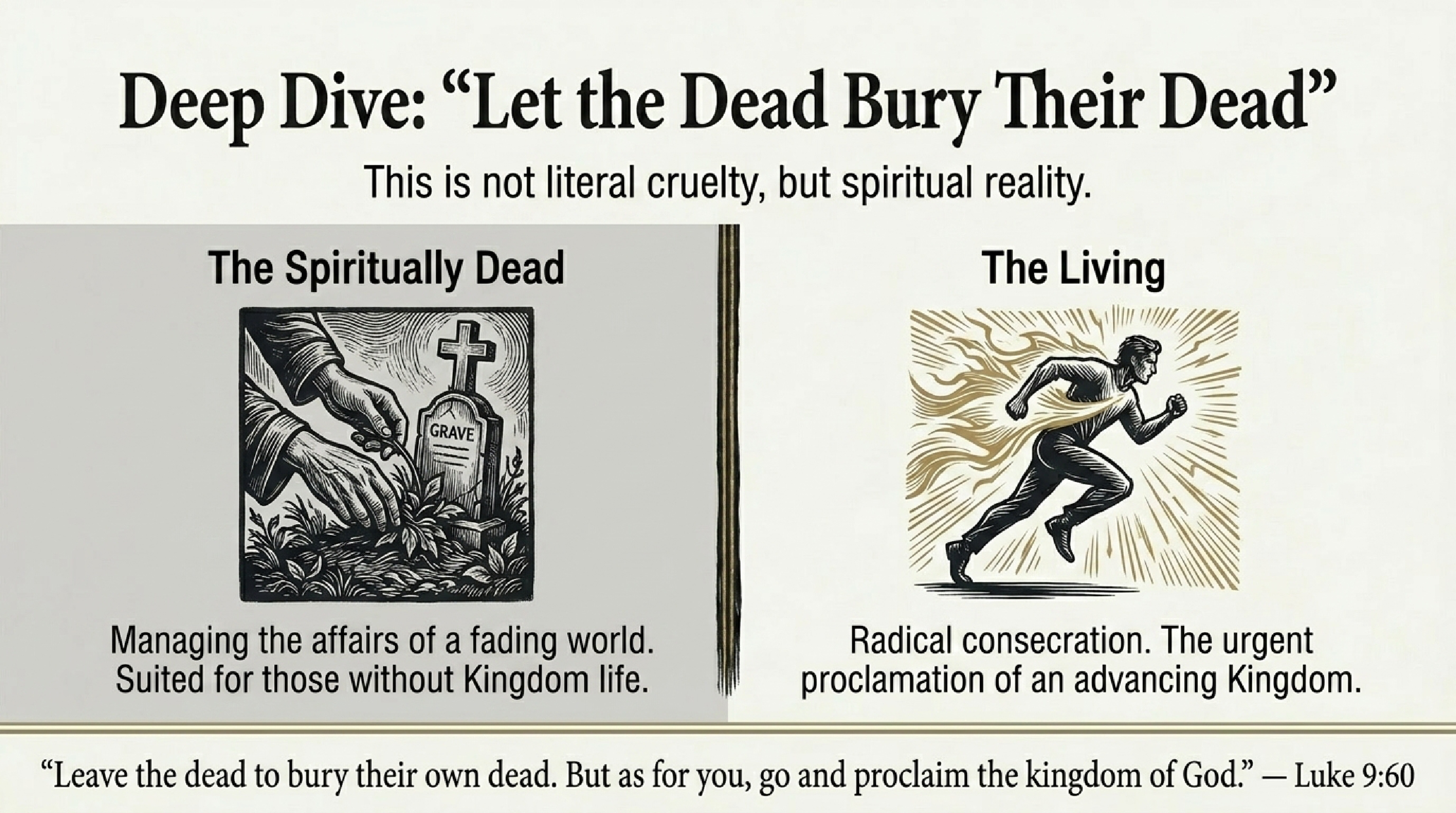
Two ways to hear this. Literally: others in the village who are not called right now can handle the burial. Spiritually: those living without Kingdom urgency — the spiritually dead — can manage the affairs of a fading world. You have been called to something different.
This is not a dismissal of family. It is an elevation of the call.
| The Spiritually Dead | The Living |
|---|---|
| Managing a fading world | Proclaiming an advancing Kingdom |
| Suited to old obligations | Called to something entirely new |
| Looking inward and backward | Eyes forward — Kingdom urgency |
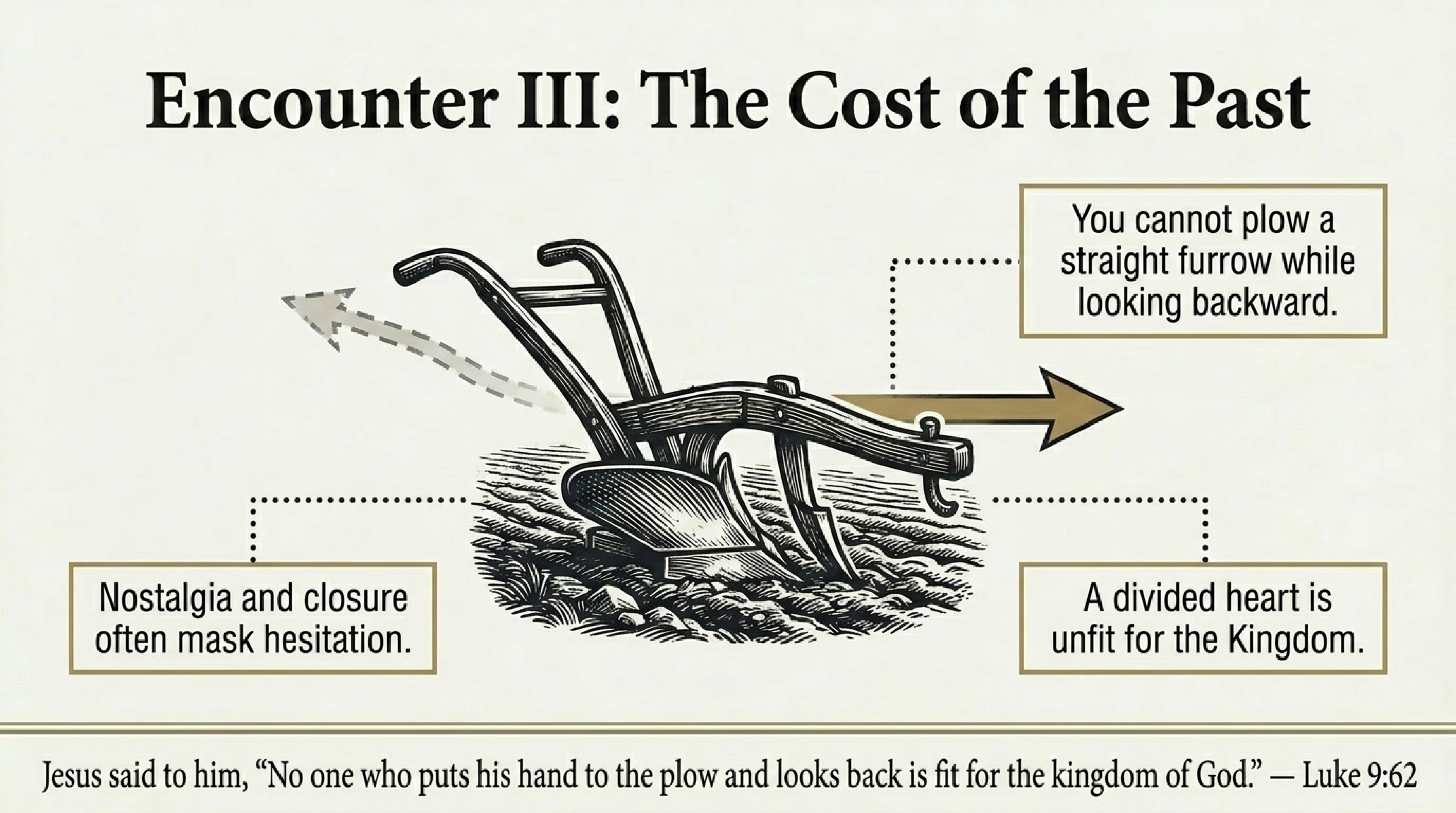
The third man wants to say goodbye — a reasonable request by any human standard. Jesus denies it. Not because farewells are wrong, but because nostalgia and the need for closure often mask hesitation. The Kingdom doesn't run on feelings of readiness. It runs on forward motion.
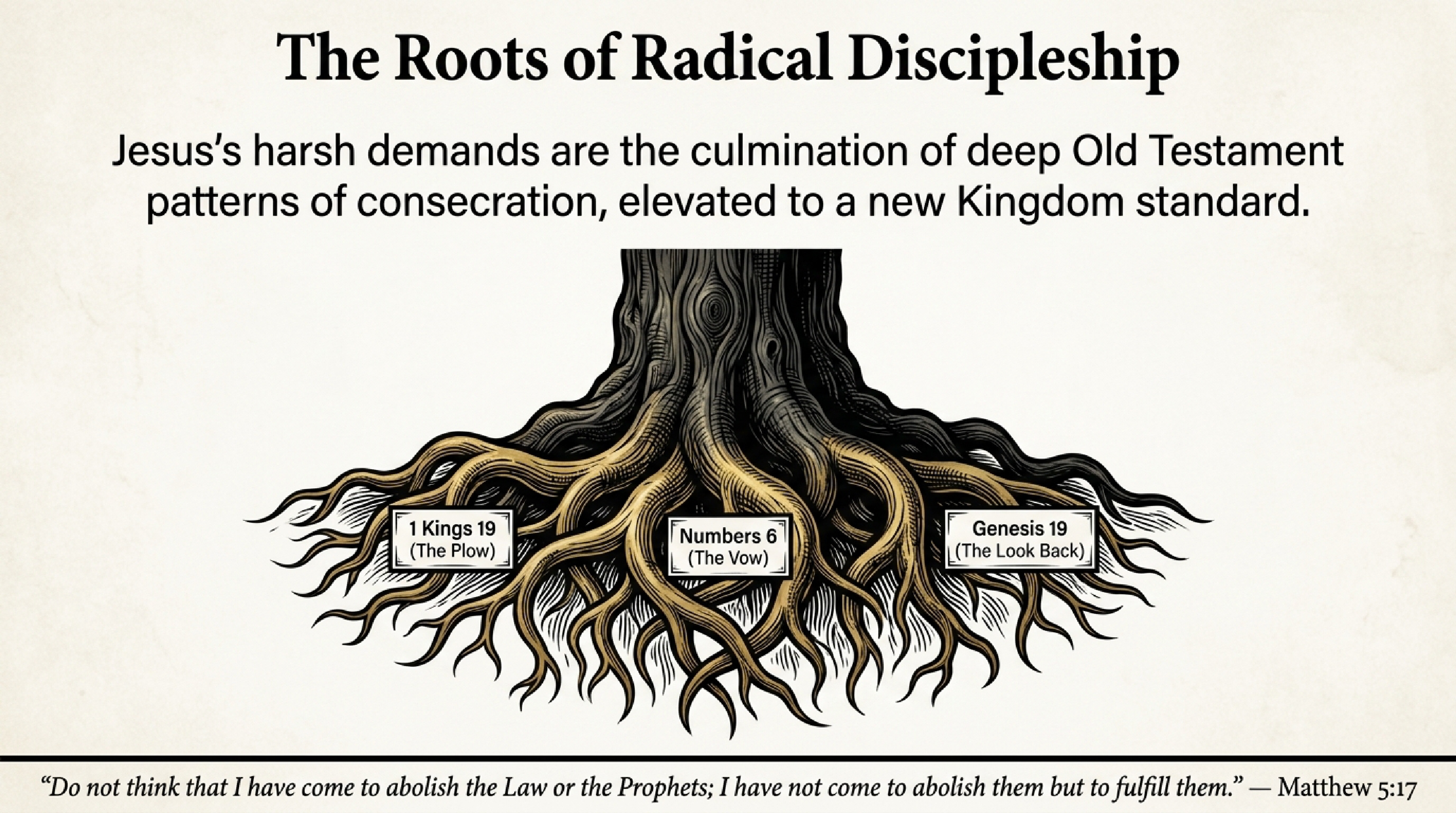
Jesus' demands in Luke 9 are not arbitrary harshness — they are the culmination of deep OT patterns. Every major demand He makes here was previewed in Israel's history. 1 Kings 19 previewed the plow. Numbers 6 previewed the consecration. Genesis 19 previewed the look back. He is not inventing a new standard. He is fulfilling the old one — completely.
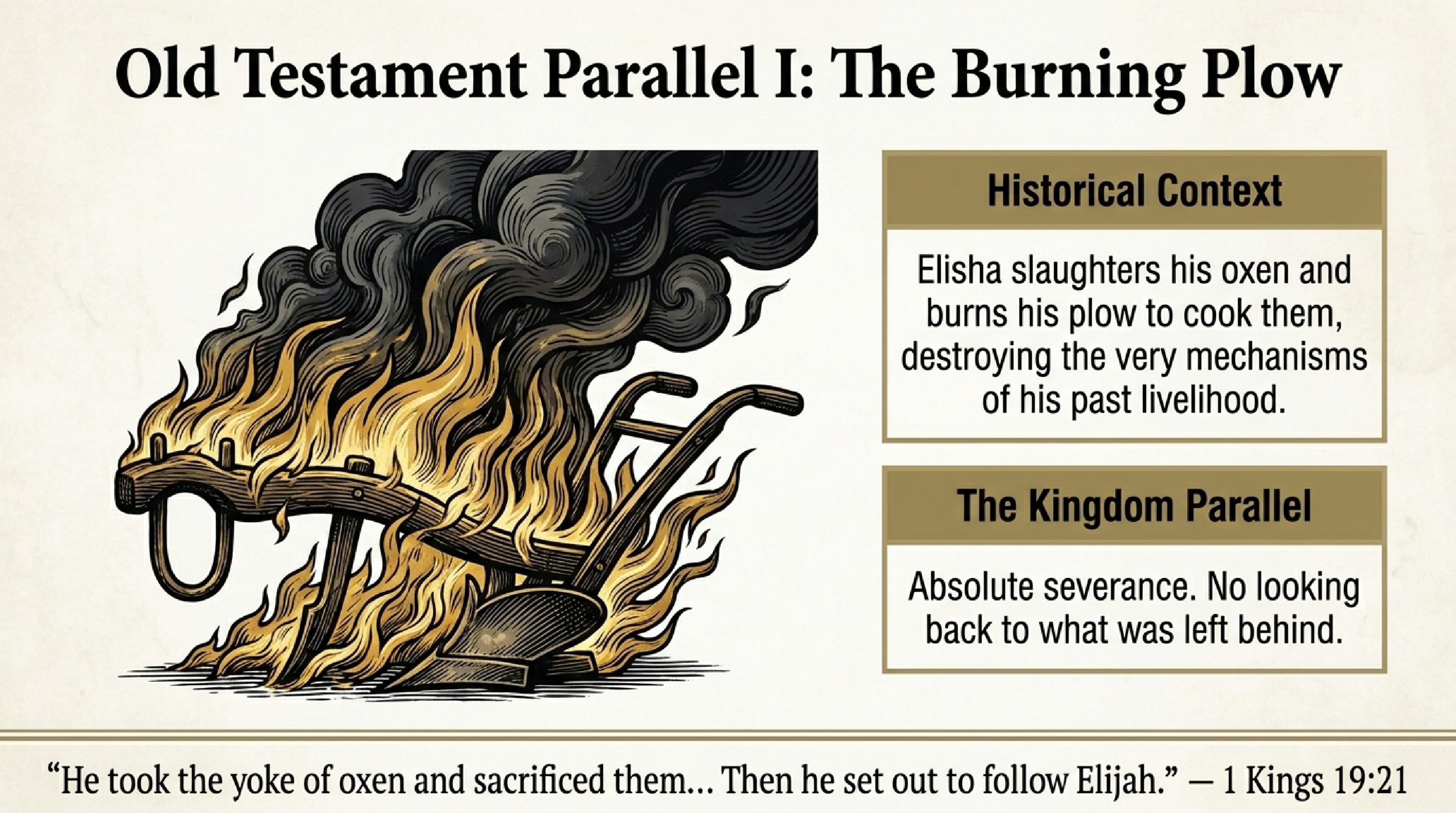
Elijah permitted Elisha to say goodbye — but Elisha went further. He destroyed the instruments of his old life entirely. He didn't just leave farming; he made returning to farming impossible. Note the contrast with Jesus in Luke 9: Elijah permitted farewell. Jesus does not. The urgency of the Kingdom call is categorically higher than even Elijah's mantle.
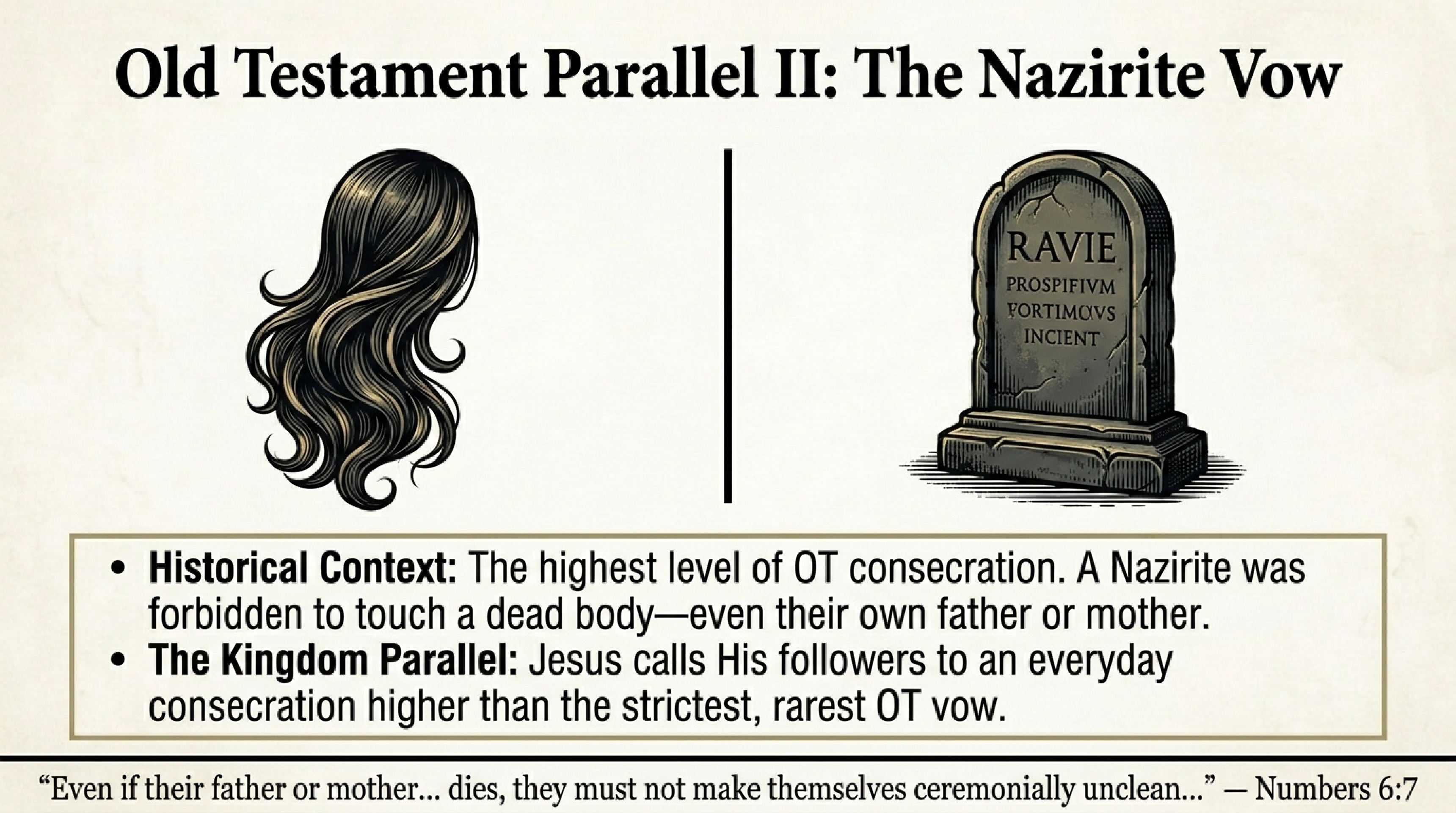
The point isn't that Jesus is callous about death or family. The point is this: following Him requires a consecration that overrides even your most sacred obligations.
The Nazirite vow was voluntary and temporary for Israel — the highest level of consecration the Torah had a category for. A Nazirite couldn't touch a dead body even for their own father or mother. Jesus is saying the Kingdom call is permanent and total — a higher consecration than anything the Law had ever required.
| The Nazirite Vow | The Kingdom Call |
|---|---|
| Voluntary | You were chosen |
| Temporary | Permanent |
| Rare — few took it | Required of all who follow |
| Defined by Torah | Defined by Jesus Himself |
"Let the dead bury their own dead" — two ways to hear it. Literally: others in the village who are not called right now can handle the burial. Spiritually: those living without Kingdom urgency can fulfill the duties of the old order. You have been called to something different.
This is not a dismissal of family. It is an elevation of the call.
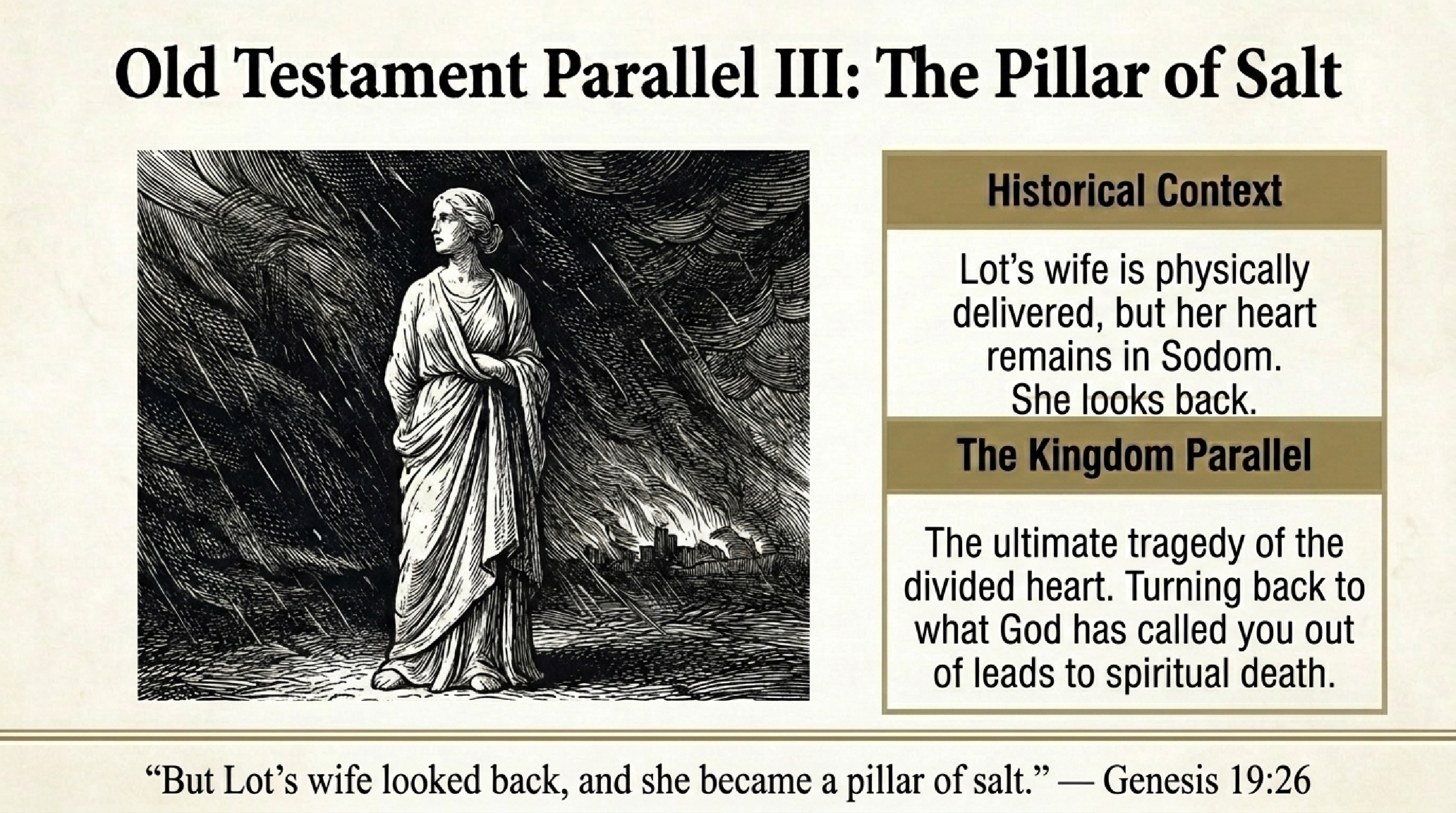
Lot's wife was physically delivered — she was outside Sodom, moving in the right direction. But her heart remained in what God had called her out of. The look back wasn't just curiosity. It was allegiance. And it cost her everything.
The ultimate tragedy of discipleship is not the person who never starts. It is the one who starts — and then looks back. Jesus says that person is unfit for the Kingdom — not as a condemnation, but as a warning: the Kingdom moves forward only.
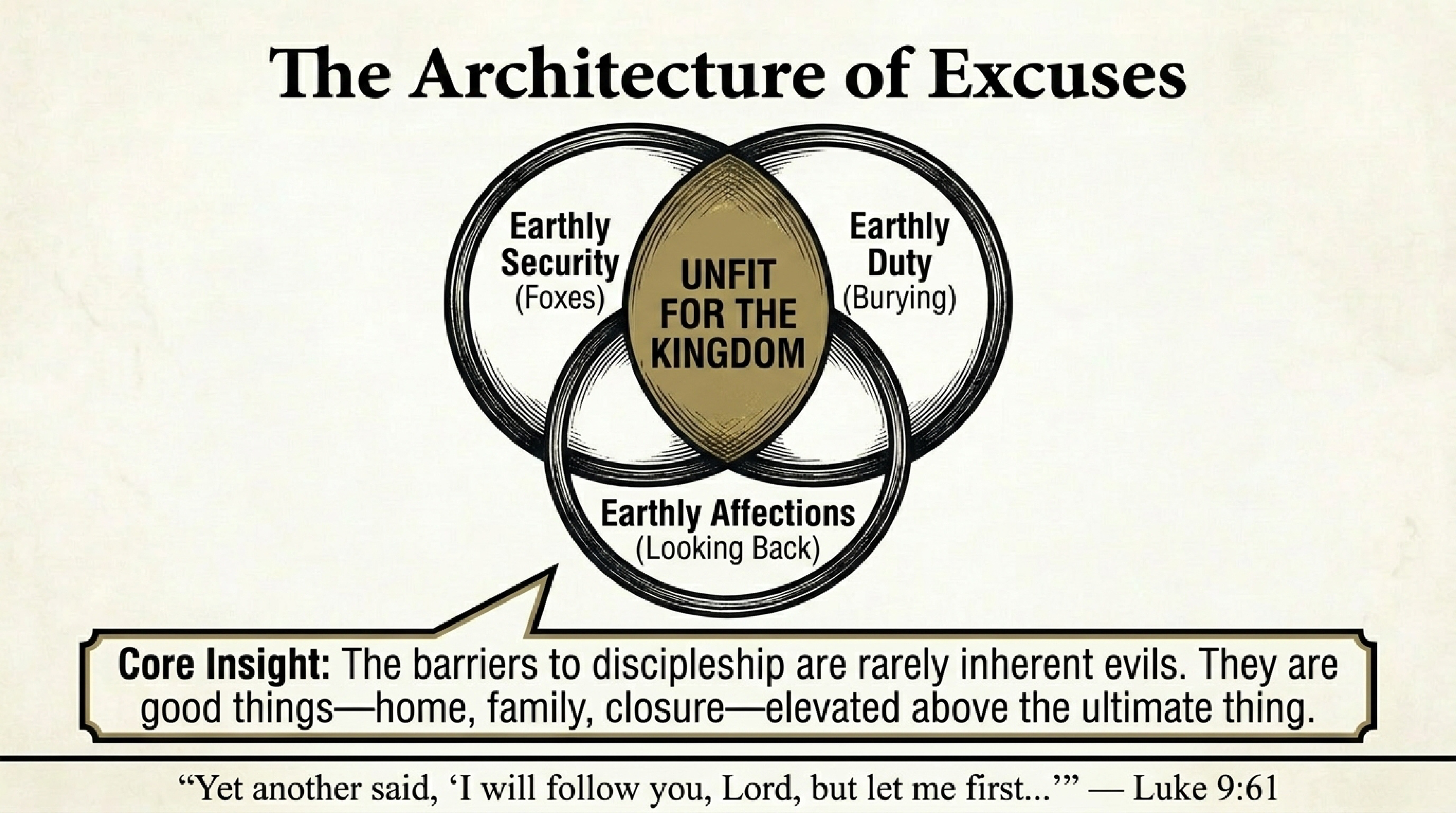
Notice what Jesus never says: "your reason is evil." He doesn't condemn comfort, family, or goodbye. These are good things. The problem is not their nature — the problem is their position. Anything placed above the call of Jesus — no matter how noble — becomes a barrier to the Kingdom.
| The Excuse | What It Really Is |
|---|---|
| Earthly Security | Good thing — wrong position |
| Earthly Duty | Good thing — wrong position |
| Earthly Affection | Good thing — wrong position |
The verdict is not cruel — it is clarifying. Jesus doesn't say "you are bad people." He says: "If this thing matters more than the Kingdom, you are not yet ready for the Kingdom." That is an invitation to reorder — not a rejection.

It is urgent.
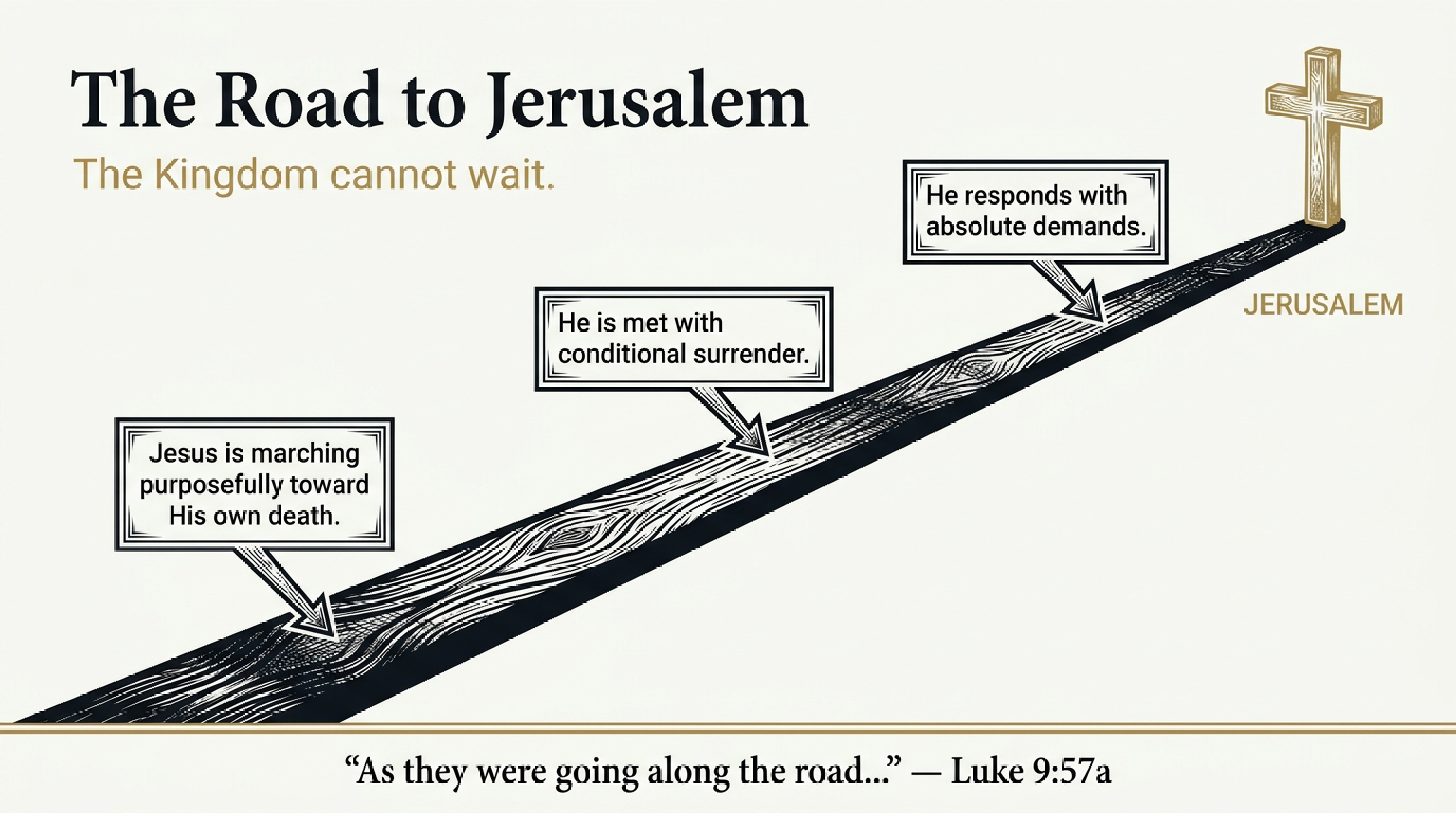
Jesus is not strolling. He is on a death march to Jerusalem — purposeful, eyes fixed, the cross already in view. Into that urgency, three men step forward with their conditions. He meets every condition with an absolute demand that exposes the true cost of the call.